16 Apr 2026

Real-time loitering detection with AI-powered video analytics

Detección de merodeo

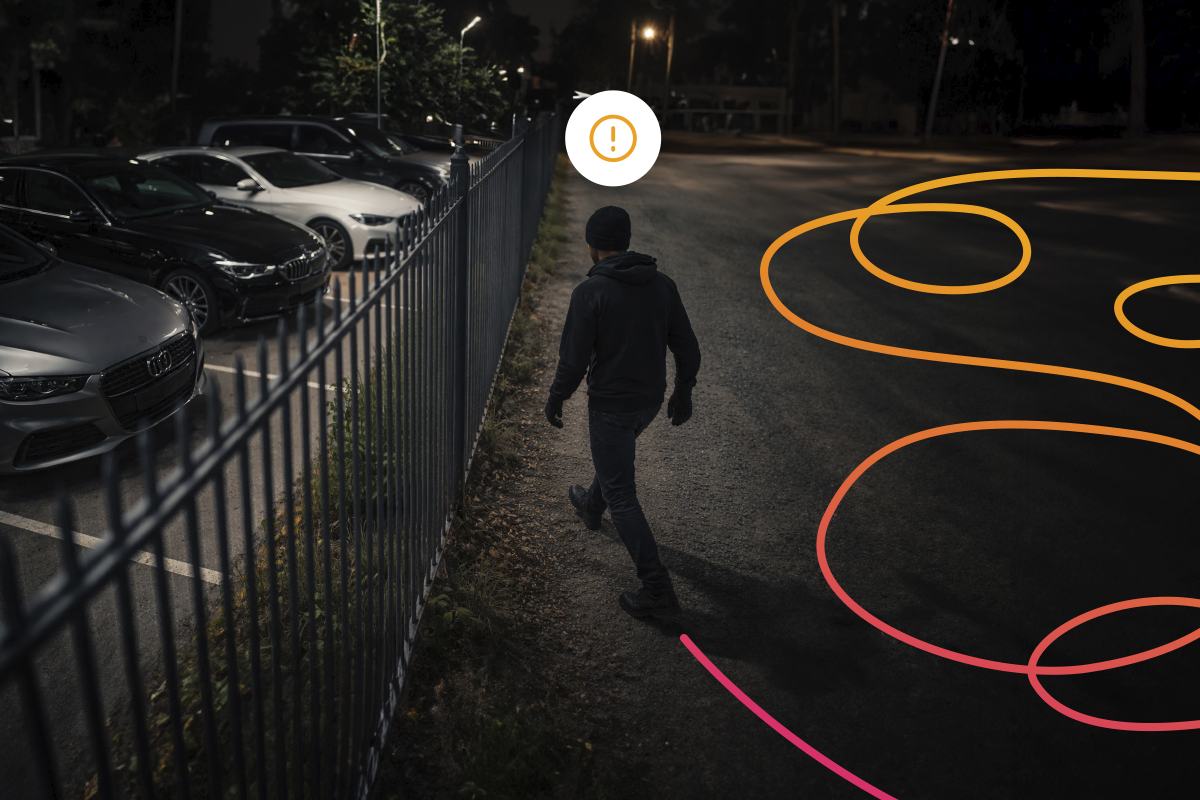
Loitering is a behaviour that often precedes security incidents, where an individual observes their surroundings, moves through areas without a clear purpose, inspects specific locations, and assesses potential opportunities. While it may be a precursor to an incident, it does not necessarily imply a clearly criminal action, making it an extremely difficult pattern to identify.

This type of behaviour can occur in any environment with human traffic: shopping centres, car parks, hospitals, airports, stations, offices, hotels, sports facilities, or public spaces. In all these settings, loitering blends easily into normal activity, making real-time detection particularly challenging. Let’s look at some typical scenarios where loitering may occur:

  • Shopping centres: High footfall environments where constant movement makes suspicious behaviour harder to detect.
  • Car parks (public or private): Areas with limited supervision where vehicles may be inspected and vulnerable targets identified.
  • Airports: Large infrastructures with high traffic and multiple transit, waiting, and access areas.
  • Train and underground stations: Dynamic environments with continuous passenger flow and extended waiting times.
  • Hospitals and healthcare facilities: Open-access spaces with multiple entry points and less controlled areas.
  • Corporate buildings and offices: Reception areas, entrances, and ground floors where visitors may move without constant supervision.
  • Hotels: Areas such as lobbies, corridors, and car parks with continuous movement of guests and visitors.
  • Stadiums and sports venues: Large gatherings during events, with complex security management.
  • Educational centres and campuses: Wide spaces with multiple access points and movement of students and visitors.
  • High street retail and shops: Open-entry environments where it is difficult to distinguish between browsing and suspicious intent.


Loitering – Business challenges and risks

Loitering occurs in environments where continuous monitoring is complex and where normal user activity makes it difficult to distinguish between typical behaviour and potentially suspicious patterns. As a result, loitering may go unnoticed until an incident has already occurred, limiting the effectiveness of traditional security systems. Identifying the contexts in which this behaviour may arise is therefore key to anticipating risks and improving response capabilities.

Loitering detection presents significant challenges for traditional security systems:

  • Difficulty distinguishing normal behaviour from suspicious behaviour.
  • Limited human monitoring capacity across multiple cameras and scenarios.
  • High levels of activity masking pre-incident patterns.
  • Lack of contextual behavioural analysis over time.
  • Reactive intervention only, once the incident has occurred.
  • Absence of early warnings based on risk patterns.

As a result, many incidents are only detected when it is too late to prevent them.


Actúa antes de que se cometa el delito


Technological solution: DFUSION /3

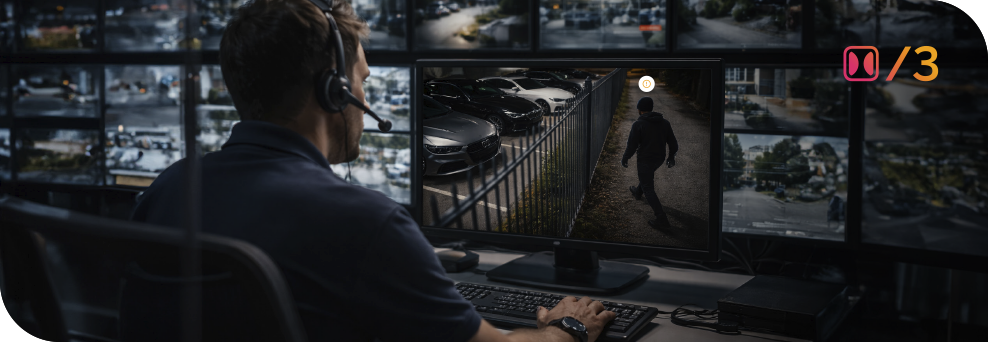
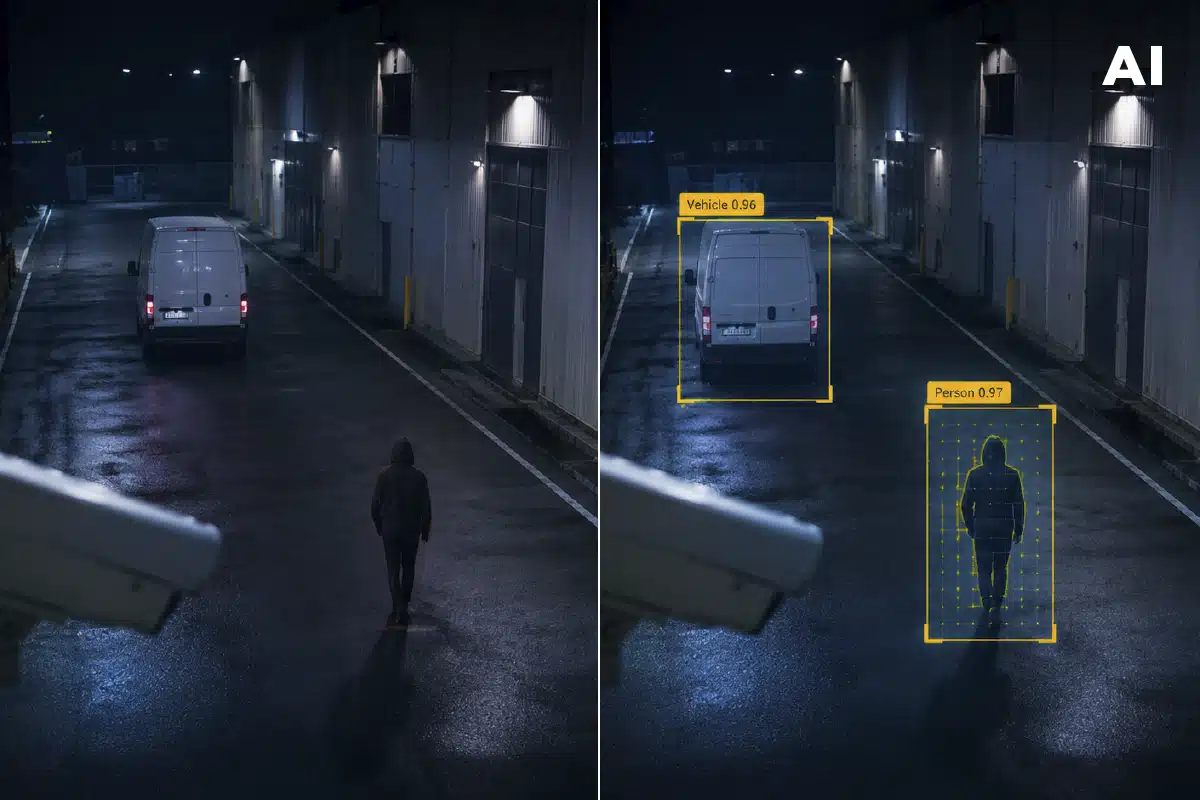
DFUSION /3 incorporates advanced AI-based video analytics models capable of detecting loitering behaviour in real time, before any incident occurs. Its key differentiator lies in Super Rules, a flexible system that allows multiple conditions to be combined in order to identify complex patterns tailored to each environment.

In this way, DFUSION /3 enables automatic real-time detection of these situations and immediate action, optimising monitoring and operations.

Real-time detection of pre-incident behaviour
Identifies suspicious patterns before any risk situation occurs.

Preventive rather than reactive response
Enables intervention before the incident, preventing escalation.

Reduced reliance on constant human monitoring
Minimises operational workload and improves efficiency.

Enhanced analytical capabilities
Provides context and intelligence about what is happening in the monitored environment.

From video surveillance to operational intelligence
Transforms cameras into active detection and prevention tools.

Improved security effectiveness across all environments
Optimises overall protection regardless of sector or size.

DFUSION /3 advantages

For end users

  • Greater sense of security in any environment.
  • Real prevention of incidents before they occur.
  • Improved experience in public and private spaces.
  • Reduced risk in high-traffic areas.
  • Increased confidence in the infrastructure.

For installers / partners

  • Easy integration with existing systems.
  • Adaptability across multiple verticals (retail, transport, offices, etc.).
  • Technology compatible with all types of hardware and software.
  • Quick and simple calibration and rule configuration.
  • Highly intuitive system setup.
  • Access to extensive technical documentation.
  • Technical guidance and support at every project stage.
  • Opportunities for security modernisation projects.

Recent

reciente

Make the most of your ONVIF cameras

Make the most of your ONVIF cameras
reciente

DFUSION /3 courses: much more than perimeter security

DFUSION /3 courses: much more than perimeter security
reciente

Slip and fall detection with AI video analytics

Slip and fall detection with AI video analytics
reciente

DFUSION /3: More power. More intelligence. Fewer false alarms.

DFUSION /3: More power. More intelligence. Fewer false alarms.
reciente

Boost Your ARC with DFUSION + evalink Integration

Boost Your ARC with DFUSION + evalink Integration
reciente

DAVANTIS at SICUR 2026: Introducing DFUSION /3, the next generation of intelligent video analytics

DAVANTIS at SICUR 2026: Introducing DFUSION /3, the next generation of intelligent video analytics