Free demo
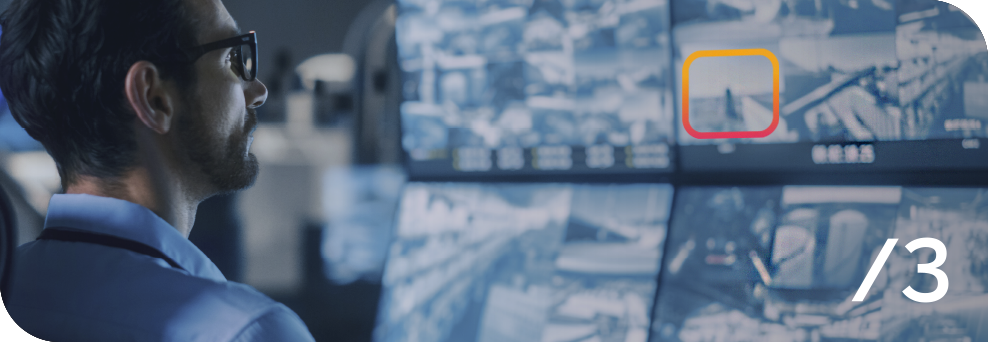
Imagine a typical day at a Central Monitoring Station (CMS) or Security Operations Center. Hundreds of active monitors, alarms going off, operators managing events non-stop. Everything seems to be running smoothly — but beneath that operational surface lies a structural problem that often goes unnoticed: high human dependency throughout every step of the monitoring workflow.
As a result, this high level of human dependency in security monitoring centers comes at a real cost: with every new client, risks grow, operational costs increase, and pressure on operators intensifies. The question every CMS should be asking is: can your business scale without increasing headcount or costs?
Monitoring Centers: when scaling increases human dependency
In most monitoring centers, growing the client base means managing more events. And more events inevitably means one of two things: hiring more staff or overwhelming the existing team. The result is increasingly long and overburdened shifts.
Furthermore, operators are exposed to high volumes of alerts — many repetitive or non-critical — and must constantly switch their attention between systems and priorities. This fragmented workflow generates cognitive fatigue, which directly impacts service quality and puts contract retention at risk.
Ultimately, the problem is not the operators. The problem is that the operational model of most monitoring centers demands a level of precision and consistency that goes beyond human control. This creates real operational fragility: performance becomes tied to the individual capacity of each shift.
The hidden cost of human dependency in monitoring centers
If monitoring centers do not evolve technologically, the problem scales alongside the business. Over time, this model generates a series of hidden costs that drag down profitability:
- Greater need for staff and ongoing training
- Variability in response quality during peak load periods
- Reduced operating margins
- Higher client dissatisfaction and risk of contract loss
- Legal exposure due to undetected or poorly handled incidents
Therefore, the solution is not to reduce headcount or increase it. It is to redesign the workflow so that operators stop reacting to everything and can focus on what truly requires human judgment.
How to reduce human dependency with AI video analytics
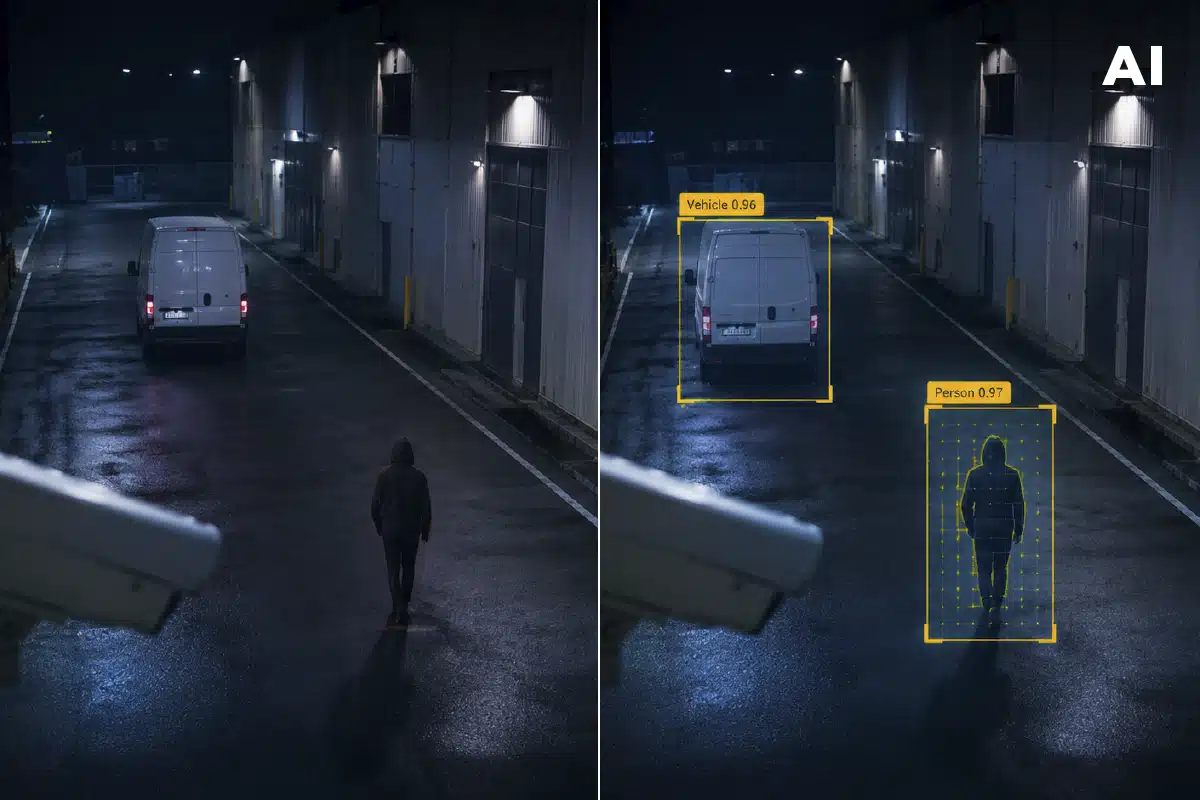
This is where technology comes in. AI-powered video analytics solutions like DFUSION /3 act as an intelligent first filter within the monitoring workflow. In doing so, they drastically reduce the burden on operators without eliminating their role. How does it work?
1. Reduces operational noise at the source
A large part of the workload in a monitoring center comes from irrelevant alerts or false positives. For this reason, DFUSION /3 automatically filters these events before they reach the operator, preventing saturation and the errors that come with high volume.
2. Automatically prioritizes critical events
Not all events require the same level of attention. However, without an intelligent tool, operators must assess each one manually. DFUSION /3 analyzes the context and prioritizes truly relevant alerts, allowing teams to act on what matters immediately.
3. Automates the handling of repetitive incidents
Many incidents follow known patterns. In these cases, DFUSION /3 automates part of the process, freeing operators from recurring, low-value tasks so they can focus on what really counts.
4. Improves clarity and decision-making
By eliminating noise and structuring information more effectively, operators receive clearer, more actionable events. As a result, cognitive effort per alert is reduced and decision quality improves.
5. Enables real-time visual verification and remote activation of deterrent strategies
Immediate visual verification reduces false positives and allows teams to respond quickly to real threats — without the need for physical intervention.
Greater operational capacity, less resources: the results
The impact of implementing DFUSION /3 translates into concrete business metrics:
- Reduced response time for critical events
- Lower rate of operational errors
- Greater monitoring capacity per operator
- More balanced workload across shifts
- Real scalability without proportional cost increases
In short, DFUSION /3 does not replace operators — it makes their work more effective, more sustainable, and more scalable. Moreover, its seamless integration with all types of existing software and hardware means it can be adopted without major changes to current infrastructure.
So, can your monitoring center scale without increasing headcount or costs? Yes. But only if you stop scaling the problem and start scaling the solution.
Want to see how DFUSION /3 can transform your monitoring center’s operations? Request a personalized demo and discover the real ROI for your business.
Where to Start: Key Steps to Implement Automation in Your Monitoring Centre
The starting point is not replacing operators, but freeing their attention from events that don’t require human judgment. The first steps usually involve identifying what percentage of the alarms your team handles today are false or low-priority, and which ones could be automatically pre-classified.
With DFUSION integrated into your monitoring centre, the system analyses the video at the source —before the alarm reaches the operator— and only escalates situations that exceed the defined thresholds. The result is immediate: less noise, more focus, and a growth capacity that doesn’t depend on hiring more staff.
If your centre still manages video reactively, now is the time to explore how intelligent automation can change the model. Contact us and we’ll analyse together the optimisation potential in your specific case.