Free demo
The problems with an intrusion detection system rarely start on the day of the incident. They usually start long before. Hidden errors and vulnerabilities can exist in an intrusion detection system and should be identified.
When something happens — an intrusion that went undetected, an alarm that arrived too late, a breach at a point that was “covered” — the first reaction is to review that day’s footage. To look for the failure at that exact moment. But it’s almost never there. It’s in the configuration nobody has reviewed since installation. In the night shift that was added without updating the detection schedules.
In the false alarms that had been generating noise for months until the team simply stopped paying attention to them.
Put your installation to the test with this checklist.
1. Still relying only on motion detection
Motion detection is nineties technology. It works. The problem is that it works for everything: a cat, a tree’s shadow, the reflection off a parked car. It doesn’t distinguish anything.
And when a system generates fifty alerts a day and forty-eight of them are irrelevant, what ends up happening isn’t that the team reviews all of them. What happens is that they stop reviewing them — or the alerts get silenced outright so they don’t interrupt operations.
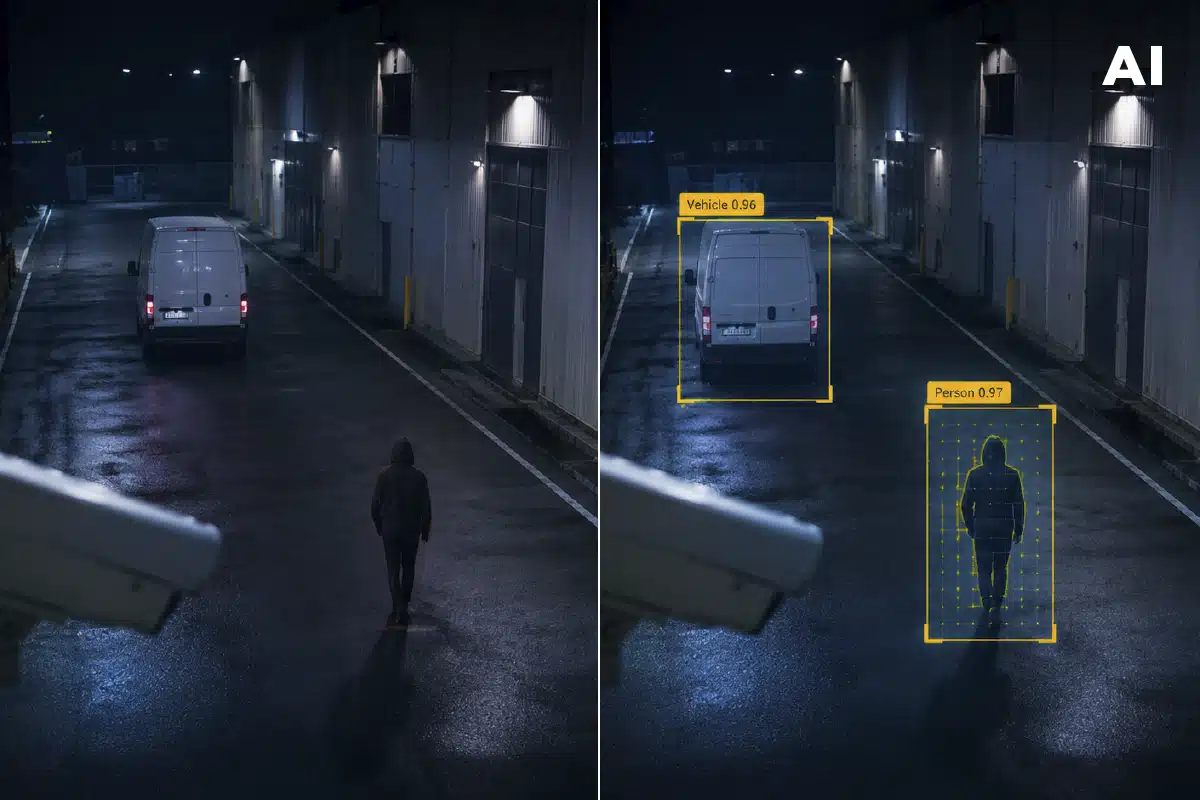
Analytics exist today that tell a person apart from an animal, that detect whether someone is walking toward the fence or just passing by, that distinguish loitering behavior from normal foot traffic. That’s not an extra. That’s what makes the system actually useful
2. Never touching the configuration again after installation day
This happens more often than you’d think.
An installation configured correctly in January can have blind spots by June. A new warehouse gets built. Vegetation grows. Containers get moved and now block a camera’s angle. A night shift gets added and the detection schedules never change.
The exclusion masks set up to filter out a tree might now be covering an entrance that should be monitored. Nobody knows, because nobody has checked.
Configuration isn’t a one-time task. It should be reviewed every time something changes at the site — and in a working facility, something is always changing.
3. Normalizing false alarms
This is probably the most expensive problem, and the hardest to catch because it happens gradually.
At first, the team reviews every alert. Then they start filtering out the ones that are “probably false.” Then the protocol loosens. Then a real alarm reaches an operator who has spent months conditioned to expect it isn’t one.
We’ve seen installations with more than a hundred false alarms a day considered “normal.” They’re not. With the right analytics, that volume can drop by more than 90%. That’s not a brochure promise — it’s what gets measured in real installations using detection technology based on appearance as well as motion.
The cost of false alarms isn’t just operator time. It’s the erosion of trust in the system. And once that trust is gone, the system stops being useful even if it’s technically working.
4. Keeping video, alarms, and analytics in separate silos
Cameras on one platform. Alarms on another system. Analytics, if there is any, on a third.
When something triggers, the operator has to access each one separately, cross-check the information manually, and only then decide what to do. In large installations, that process can take minutes.
Minutes that, in a real incident, are exactly what separates intervening in time from just documenting what happened afterward.
Real integration means that when analytics detects an event, the alarm system already knows which camera to activate, already has the clip generated, and has already sent the notification to the right channel. The operator arrives at a resolved situation where all that’s left is to make a decision — not to reconstruct what happened.
5. Adding more cameras when the problem is something else
Understandable as a reaction. Almost always wrong as a solution.
If the system generates too much noise, more cameras generate more noise. If there are uncovered zones, the question is why — and the answer may be that the existing cameras are poorly positioned, not that more are needed.
Before expanding any installation, it’s worth asking a different question: what useful information are we not getting, and why? Sometimes the answer is one camera at one specific point. Other times it’s improving what’s already installed.
6. Installing outdoors without accounting for real conditions
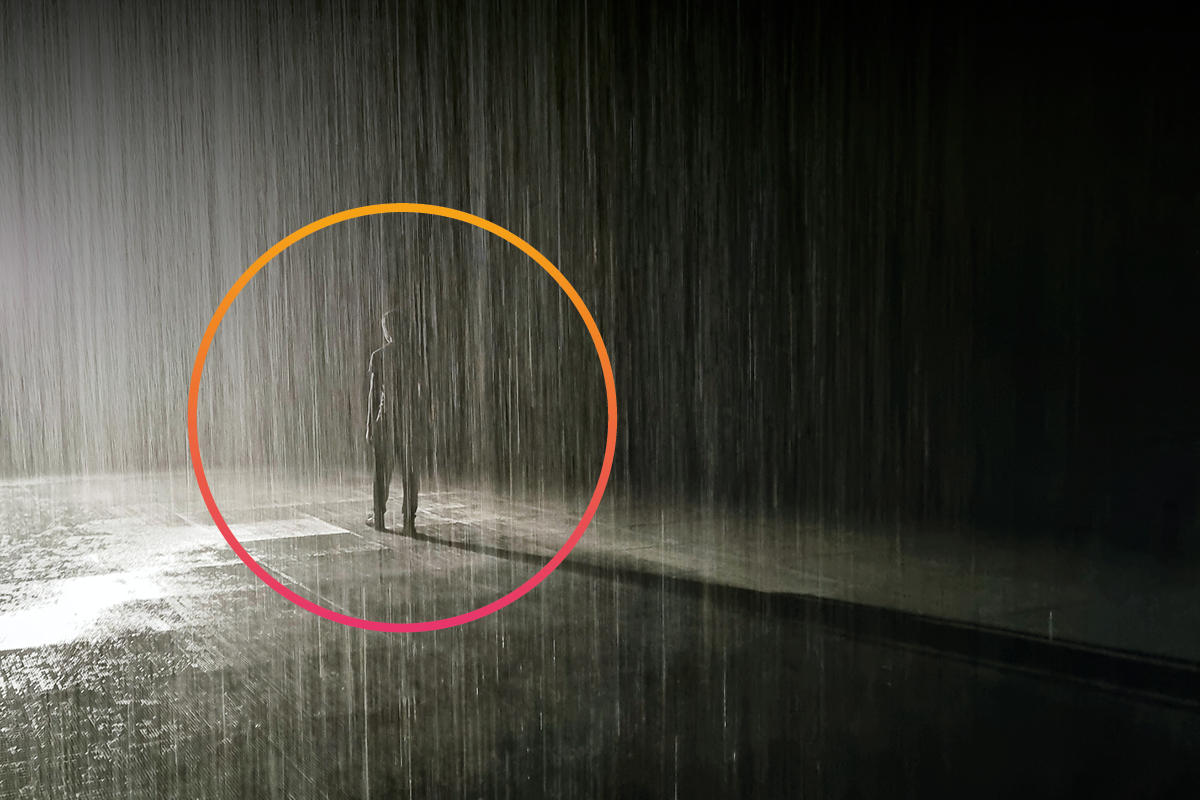
Rain. Fog. Backlight at eight in the morning. Flickering artificial light at night. Temperature swings that create thermal interference.
The outdoors is not a controlled environment, and systems that perform well indoors or under ideal conditions can develop coverage gaps exactly when conditions get difficult — which tends to be exactly when they’re needed most.
This calls for specific configuration, sometimes supplementary lighting, sometimes thermal cameras at critical points. It’s not something decided on site during installation. It’s something that should be defined at the design stage.
7. Not defining what counts as a real alarm before starting
Is a person in the parking lot at 11 p.m. an alarm? What if they walk around a vehicle? What if they stop for five minutes next to the fence?
Without answers to these questions before configuring the system, the analytics work off implicit criteria that nobody has validated. The result is unpredictable and hard to adjust later.
Installations that work well define this with the client before anything is installed — and revisit those criteria against real data during the first few weeks. What looked obvious on paper isn’t always obvious once you see how the installation actually behaves.
8. Not having a written response protocol
The system detects. Then what?
Who receives the notification? Through which channel? What do they do if they can’t visually verify the event? When does it escalate to the monitoring station, and when is it handled internally? What happens at 3 a.m. on a Sunday?
At many installations, these questions have no documented answer. Each person who receives an alarm makes their own call. That works reasonably well for a long time — until it doesn’t.
9. Not measuring anything after installation
How many alarms did the system generate last month? How many were real? How long did it take the team to respond to the real ones?
Without this data, it’s impossible to know whether the system is performing well, getting worse, or whether one specific zone is generating 80% of the noise.
A security installation isn’t a project that gets delivered and closed out. It’s a system that degrades if it isn’t measured and adjusted. Problems that aren’t measured get normalized.
Checklist: critical mistakes in a video surveillance system
Below you can put your perimeter security CCTV installation to the test with our checklist. The answer usually says a lot about the real state of the video surveillance sector.
In many cases, the issue isn’t a lack of technology — it’s decisions made poorly at key stages of the project: design, installation, or configuration.
Catching them in time doesn’t just improve the quality of the system. It can be the difference between a reliable installation and one that fails exactly when it’s needed most.
Which of these mistakes do you see most often in the projects you work on?
The answer usually says a lot about the state of the industry.