Free demo
Effective waste management is a global priority, with millions of tons of waste generated annually. Recycling Plants play a crucial role in sustainable waste management, processing various materials such as municipal solid waste (MSW), industrial waste, construction and demolition debris (C&D), textiles, footwear, packaging, biomedical waste, oils, lubricants, and tires, among others.
Given the unique characteristics of recycling facilities, including their location and regulatory framework, identifying security challenges is essential for designing an effective surveillance and protection strategy. Precision, seamless integration with other technologies, and customized security rules are critical factors in this sector. But how can recycling plants effectively manage perimeter security? What technologies ensure maximum detection and reduced false alarms?
Security Challenges in Recycling Plants
Recycling plants are vital to the circular economy, processing large volumes of reusable materials. These facilities are often located in remote areas, making traditional security measures like fences or security guards less effective. Additionally, poor lighting, irregular perimeters, and uncontrolled access points increase their vulnerability to threats such as theft, vandalism, and accidents.
Security concerns include:
- Theft and vandalism: Valuable recyclable materials, such as copper and aluminum, are frequent targets, while equipment damage can disrupt operations.
- Unauthorized access and trespassing: Large open areas are difficult to secure, increasing the risk of intrusions that could endanger personnel and business continuity.
- Environmental and public safety risks: Hazardous materials and sharp objects pose safety hazards, requiring advanced fire alarms and intrusion detection solutions.
- Regulatory compliance: Meeting environmental and industrial regulations demands constant monitoring and documentation.
- Visual evidence for investigations: High-quality footage helps resolve incidents effectively and strengthens security protocols.
Perimeter Security Solutions
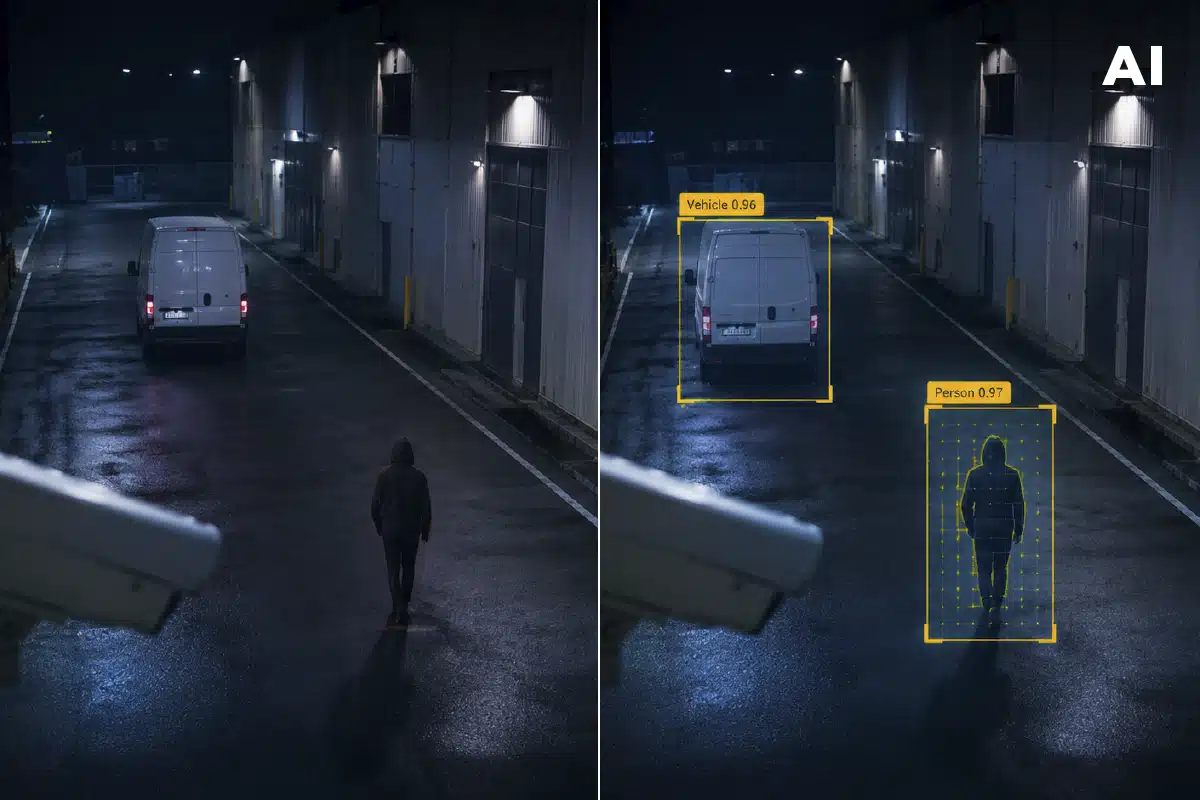
To mitigate these security risks, Recycling Plants need cutting-edge technological solutions that provide comprehensive protection. Intelligent perimeter video analytics, powered by artificial intelligence (AI), offer advanced detection and response capabilities. These systems can identify intruders from long distances, even in low-visibility or adverse weather conditions, classifying threats in real time and prioritizing necessary actions.
By sending real-time alerts with video clips, security teams can respond immediately, significantly reducing intrusion risks and false alarms. Additionally, automated deterrents such as spotlights, sound alarms, and audio messages add a proactive layer of protection. These technologies not only ensure compliance with regulatory standards but also contribute to business sustainability by minimizing costs and maximizing operational efficiency.

Why DFUSION is the Ideal Intrusion Detection System for Recycling Plants
DFUSION leverages AI-driven video analytics to enhance security, offering:
- Protection for critical areas: High-accuracy detection in zones containing hazardous or high-value materials.
- Preventive deterrence capabilities: Automated responses, including lights, sound alarms, and audio warnings to discourage illicit activity.
- Real-time visual monitoring: Integrated camera systems for continuous surveillance and evidence collection.
- Effective large-area coverage: Overcomes the limitations of fences and security personnel, ensuring precise detection even in open and hard-to-secure spaces.
- Resource optimization: Reduces security personnel workload through automation and real-time alarm verification, lowering operational costs.
- Advanced technology: Features such as Threat Levels prioritize incidents based on severity, while Maps in Action enable interactive real-time monitoring.
With DFUSION, recycling plants can significantly reduce theft and vandalism while minimizing false alarms. Discover how DFUSION works in real-time and enhance your facility’s security today!
Integration with Waste Management Systems and Access Control
Security at recycling plants does not operate in isolation. DFUSION integrates with access control systems and the centre’s operational management platforms, allowing security events to be correlated with facility activity. For example, detecting human presence in a sorting area outside operating hours, or identifying unauthorised vehicles in the unloading area.
This integration also allows periodic incident reports to be generated, facilitating decision-making on security infrastructure and compliance with the regulatory requirements applicable to waste management facilities.
Proven Solution in Demanding Industrial Environments
DAVANTIS has extensive experience in implementing video analytics in highly complex industrial environments, from critical infrastructure to waste treatment facilities. If you manage a recycling plant and want to assess how to improve security coverage without increasing security personnel, we can help you design a tailored solution.
The ability to cover large perimeters with a reduced number of cameras, combined with intelligent detection that distinguishes between humans, vehicles and animals, makes DFUSION particularly suited to the operational reality of recycling plants: vast outdoor spaces, irregular activity schedules and the constant movement of machinery. The result is a security system that adapts to the complexity of the environment rather than forcing the environment to adapt to the system.
Beyond intrusion detection, DFUSION can also be configured to monitor internal safety protocols: access to hazardous areas, compliance with PPE requirements, or the detection of unauthorised vehicles within the operational perimeter. A single platform, multiple layers of protection, all adapted to the specific challenges of waste management environments.
Contact our team to find out how other waste management facilities are already using DFUSION to strengthen their security perimeter and reduce operational costs associated with manual surveillance.