Free demo
“The system doesn’t work in heavy rain.” It’s one of the most common technical objections in outdoor perimeter security, and it isn’t unfounded: for years, it was true. Conventional motion detection systems rely on pixel changes in the image, and rain, fog, wind moving vegetation, or a sudden light change are, to that kind of algorithm, practically indistinguishable from a person moving. The result: either the system fires alarms nonstop whenever the weather changes, or sensitivity gets turned down so far it stops detecting real intrusions exactly when they matter most.
The underlying problem is that adverse conditions aren’t an exception in outdoor installations, they’re the norm on any uncovered perimeter for a good part of the year. A system that only works well under clear skies and daylight isn’t, in practice, a reliable system.
Why bad weather confuses traditional systems
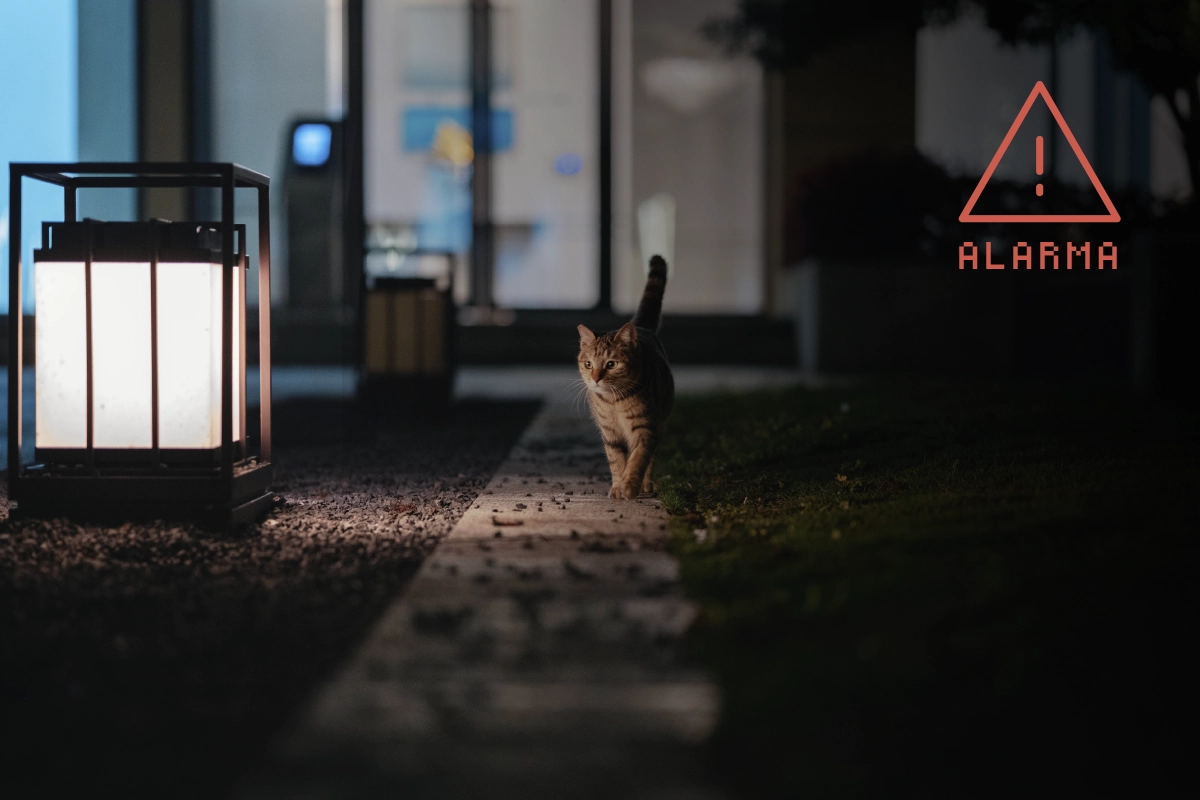
The causes are the same ones behind most false alarms in perimeter security: rain, fog, and snow alter the image’s contrast and sharpness; wind moves vegetation, creating constant pixel changes; sudden light changes, sunrise, sunset, vehicle headlights, create reflections and shadows that a basic algorithm reads as suspicious movement. None of these phenomena represent a real threat, but to a system that only detects “something moved,” they’re indistinguishable from an intruder.
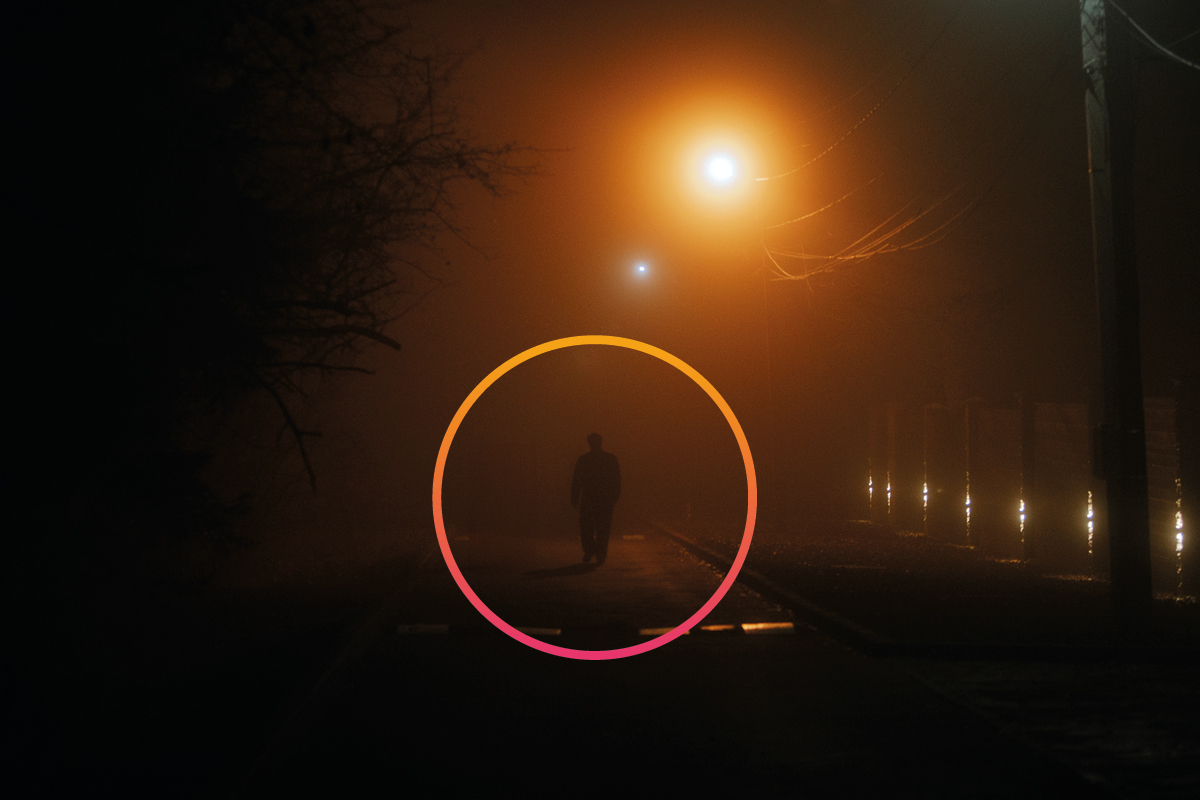
On top of that there’s a second, quieter problem: when visibility drops, fog, backlight, partial darkness, many systems don’t just generate more noise, they also stop detecting real objects that are partially hidden or poorly lit. In other words, the same bad weather that triggers false alarms can also hide a real intrusion. It’s the more expensive of the two scenarios.
How it gets solved: detection trained for real outdoor conditions, not the lab
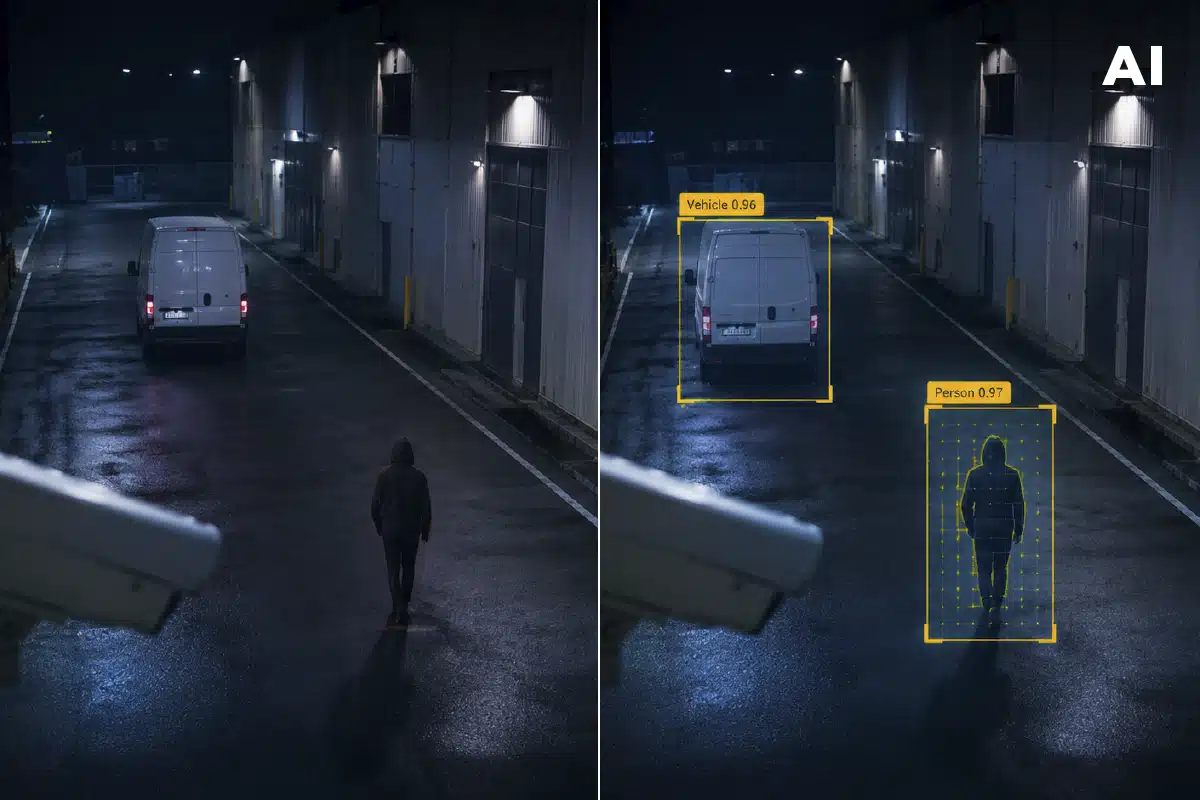
The difference between a system that fails in bad weather and one that doesn’t comes down to what the algorithm actually analyzes. DFUSION /3 combines two AI analysis engines working in parallel: one evaluates the object’s appearance (shape, size, type) and the other its movement pattern and behavior. When both agree there’s a real person or vehicle, the alert fires; when what’s moving is rain, vegetation, or a reflection, neither engine classifies it as a threat and there’s no alarm.
This combination is the same one that enables reliable long-distance detection, where low visibility and bad weather are precisely the most common challenge: poor lighting, rain, backlight, or a complex background are the conditions where a conventional system fails most, and where the difference from a system trained specifically for outdoor use shows the most.
On top of that, the Threat Levels feature lets you adjust sensitivity for the whole system, or a specific group of cameras, based on current conditions, switching from a more sensitive profile to a more balanced one with a single click. This is especially useful in installations where weather changes sharply by season: there’s no need to reconfigure camera by camera every time rainy season or fog season arrives.
What any video analytics provider should be able to answer
Before trusting that a system “works in bad weather,” it’s worth asking for something more concrete than a generic claim. Useful questions for any technical evaluation:
- Does the system tell the difference between vegetation moving and a person moving, or does it only detect pixel changes?
- What happens to the false alarm rate specifically on rainy or windy days, compared to a clear day?
- Does long-distance detection hold up in fog, or only under ideal conditions?
- Does sensitivity need to be manually reconfigured when conditions change, or does the system adapt on its own?
A system that can’t answer these four questions with concrete data probably hasn’t been tested in real outdoor conditions, only in favorable demo settings.
Why this matters more in certain sectors
The bigger and more exposed the perimeter, the more this limitation weighs. Power plants, airports, and outdoor logistics or industrial sites can’t afford a system that becomes unreliable the moment the weather changes: these are precisely the sectors where the perimeter is exposed to the elements year-round, and where an intrusion missed because of fog carries the highest cost.
FAQ
Why do rain or wind cause false alarms in video surveillance?
Conventional motion detection systems analyze pixel changes between frames. Rain, fog, wind moving vegetation, or sudden light changes alter those pixels in a way that’s practically indistinguishable from a person moving.
What sets apart a system that’s reliable in bad weather from one that isn’t?
It combines two analysis engines in parallel, object appearance and movement pattern, and only raises an alarm when both agree there’s a real person or vehicle, not when what’s moving is rain, vegetation, or a reflection.
What are Threat Levels?
A feature that lets you adjust sensitivity for the whole system, or a group of cameras, based on current conditions, switching from a more sensitive profile to a more balanced one without reconfiguring camera by camera.
What should I ask a provider about how their system performs in bad weather?
Whether it tells vegetation apart from a person or only detects pixel changes, what false alarm rate they document on rainy or windy days versus a clear day, whether long-distance detection holds up in fog, and whether sensitivity adapts on its own or needs manual reconfiguration.
In which sectors does this limitation matter most?
In those with large perimeters exposed to the elements year-round: power plants, airports, and outdoor logistics or industrial sites, where an intrusion missed because of fog carries the highest cost.
The only reliable way to know if a video analytics system can handle your installation’s conditions is to see it work with data from your own site, not a demo video shot on a clear day. Book a free demo and a DAVANTIS engineer will assess your installation, its real weather exposure, and how DFUSION /3 would perform in your specific conditions.